Most events are not lost in the room. They are lost in the gaps: the clunky registration form, the joining link that arrives too late, the session that starts five minutes behind, the silence when nobody knows how to network. Attendees rarely complain about these things out loud. They simply drift, drop off and forget.
Attendee experience optimization is the discipline of closing those gaps. It means treating the whole journey as a designed experience rather than a series of logistics. Done well, it lifts attendance, engagement and the outcomes that actually matter to your business. Here is how to approach it.
What is attendee experience optimization?
Attendee experience optimization is the practice of improving every stage of an attendee's journey so that the event feels effortless, relevant and worth their time. It spans four moments: discovery and registration, the run-up, the live experience, and the follow-up.
The key idea is simple. Attendees judge an event by its friction, not just its content. A brilliant keynote loses its shine if getting into the session felt like a fight. So the goal is to remove effort everywhere it isn't adding value, and to add meaning everywhere it is.
How do you optimise registration and first impressions?
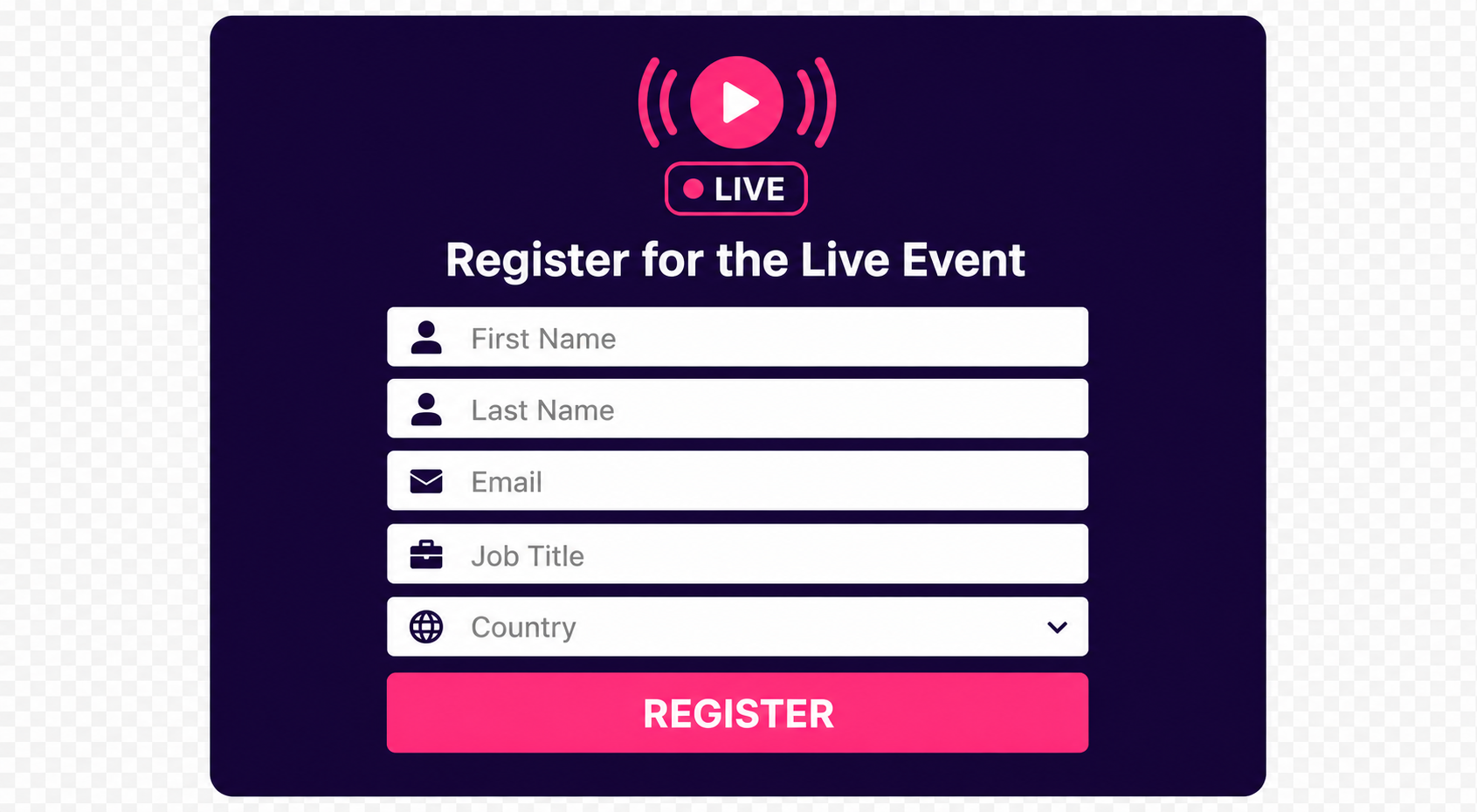
Registration is where you win or lose people before the event has even begun. Every extra field, every confusing step and every unbranded page costs you attendees.
A few practical rules:
- Ask only for what you will actually use. Twelve fields is a wall. Three or four is an invitation.
- Keep the branding consistent from the email to the registration page to the event itself, so the experience feels like one continuous thing.
- Send calendar invites and clear joining instructions immediately, then remind people again close to the day. A large share of no-shows are simply people who forgot or lost the link.
Think of registration as the first session of your event, not the paperwork before it.
How do you keep attendees engaged during a live event?
Engagement is not a feature you switch on. It is the sum of small design choices that make people feel part of something rather than talked at.
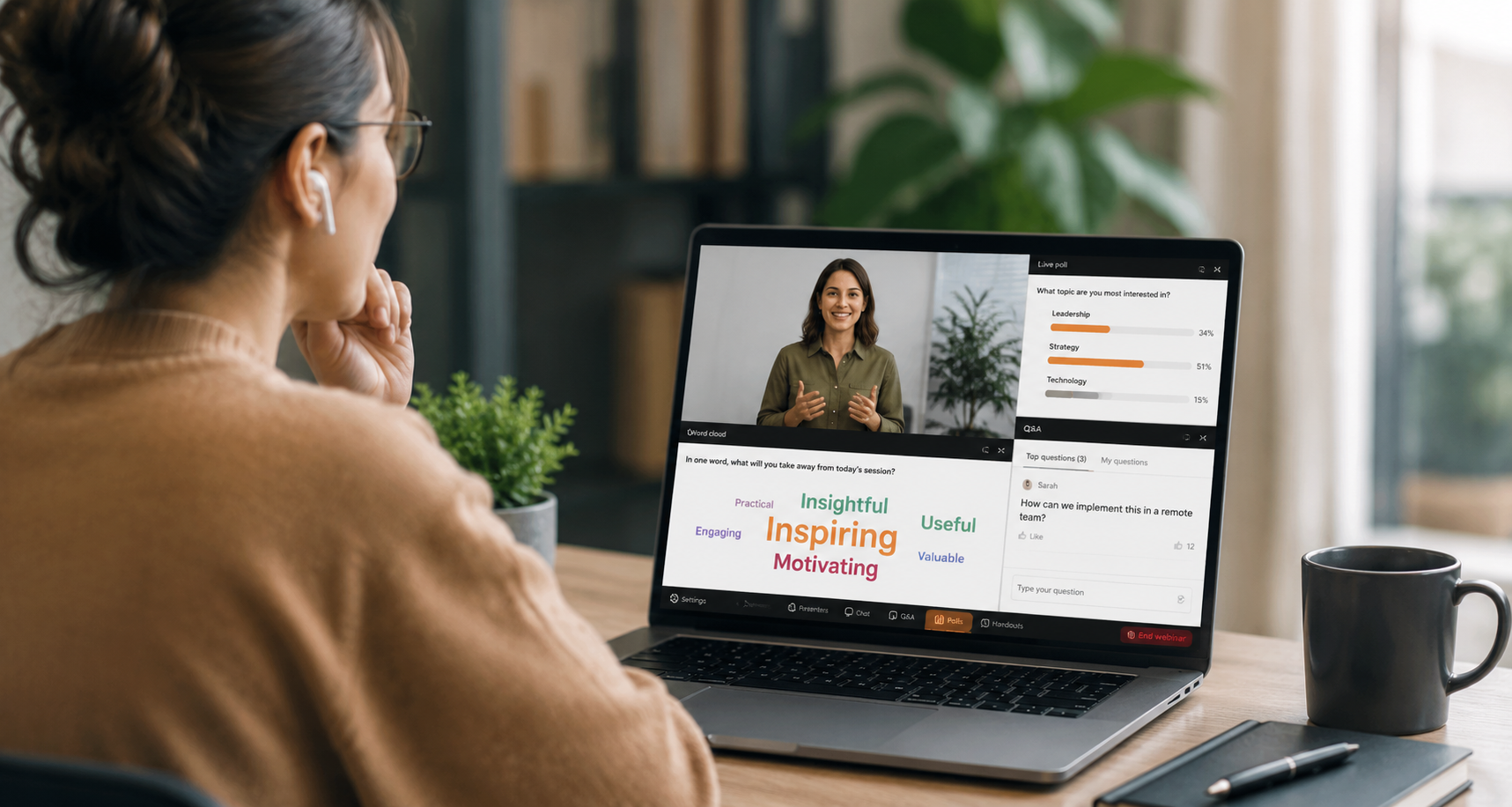
Start with pace. Sessions that run long or start late erode trust quickly. Build in deliberate interaction: live polls, Q&A, quick reactions and moments where the audience shapes what happens next. These give attendees a reason to stay present rather than half-watching in another tab.
Relevance matters just as much. If you run a large event, use tracks and clear signposting so people can find the content meant for them without wading through everything else. The less time someone spends deciding what to watch, the more time they spend actually watching.
And never underestimate reliability. The most sophisticated interactive features count for nothing if the stream buffers or the audio drops. A stable, high-quality broadcast is the foundation the whole experience sits on.
How do you make networking and matchmaking actually work?
Networking is the part most virtual and hybrid events get wrong. Organisers open a chat room, hope for the best, and wonder why it stays quiet.
Good networking is structured, not left to chance. Instead of relying on random encounters, connect the right people on purpose. Matchmaking based on interests, roles or goals turns a crowded room into a set of relevant introductions. When an attendee is nudged towards three people worth meeting, they are far more likely to engage than if they face a list of hundreds.
A few things that help:
- Give people a reason and a prompt to connect, such as shared topics or session interests.
- Make it easy to move from a message into a live conversation without extra tools or logins.
- Create smaller spaces, like topic-based rooms or roundtables, where conversation feels natural rather than performative.
The aim is to send people away with connections, not just content.
What invisible work makes an event feel seamless?
A flawless attendee experience is built on work the attendee never sees. Behind every smooth moment is a set of connected systems, a rehearsed run of show, and someone watching the live event closely enough to catch a problem before the audience does.
Three things sit behind seamless events:
- Integrated data, so registration, attendance and engagement all speak to each other and you are not stitching spreadsheets together afterwards.
- Live monitoring, so a dropped stream or a stalled session gets fixed in seconds rather than minutes.
- A dedicated production mindset, where someone owns the experience end to end and treats the broadcast with the care of a live television programme.
This is where many self-service platforms quietly let organisers down. The technology works until the moment it doesn't, and there is nobody there when it matters.
How do you measure and improve the attendee experience?
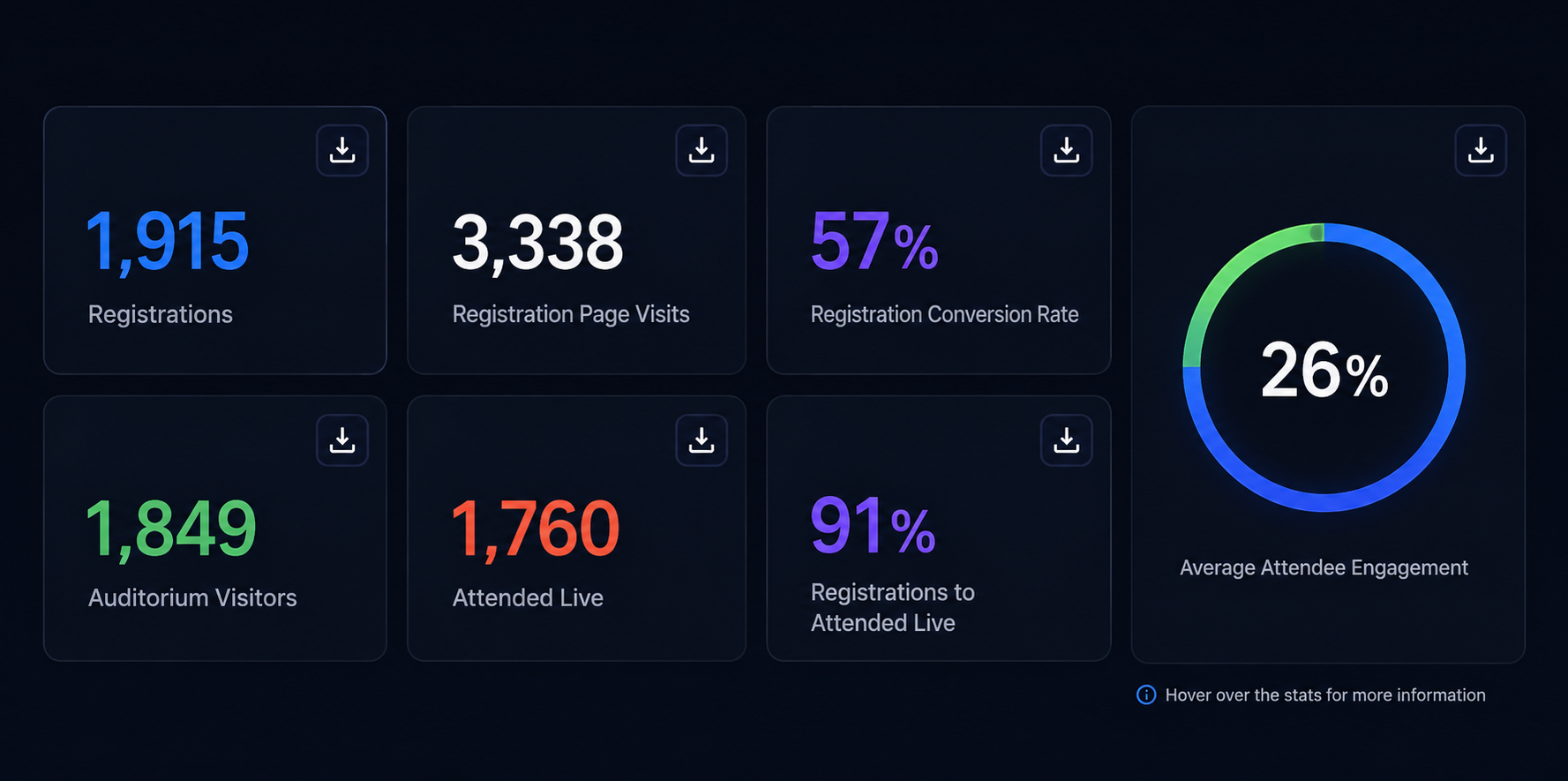
You cannot optimise what you don't measure. Look beyond attendance numbers to signals of real experience: how long people stayed, which sessions held them, how many questions were asked, how many connections were made, and what they told you afterwards.
Then close the loop. Send a short, focused follow-up while the event is fresh, share the recordings promptly, and use what you learn to redesign the next event. Optimization is a cycle, not a one-off checklist.
Bringing it all together
The best events feel easy for the attendee precisely because so much thought went into removing friction and adding meaning. Optimise the registration, respect people's time, build in real interaction, connect the right people, and back it all with reliable technology and a watchful production team.
If you are planning a webinar, virtual event or large hybrid programme and want the experience to feel effortless for your audience, WorkCast combines the platform and the production expertise to make that happen. It might be worth a conversation before your next event.
.png?width=2380&height=2380&name=%E2%80%9CClick%20here%E2%80%9D%20to%20view%20our%20open%20uni%20handbook%20(1).png)
Share this
Attendee Engagement Tools: What Actually Keeps People Watching

The Metrics That Actually Matter: A Practical Guide to Event Data and Analytics