Getting internal communications right is becoming increasingly difficult. Employees are faced with a constant stream of emails, messages, notifications, documents and updates throughout the working day, all competing for their attention.
As a result, even important internal messages can easily be skimmed, put aside for later or missed altogether. It is not necessarily a sign of disengagement. Often, it is simply the reality of trying to process more information across more channels than ever before.
That is the real engagement problem. Not too little communication, but too much of the wrong kind. So how do you cut through when everyone else is shouting? The answer is not to shout louder. It is to communicate with more intention.
Why does internal communication feel like noise?
Noise happens when volume outpaces value. When every update is flagged urgent, nothing is. When leadership broadcasts the same generic message to 5,000 people who have wildly different roles, most of them tune out because the message clearly was not written for them.
Three culprits show up again and again:
- Everything travels at the same priority. If a fire drill notice and a canteen menu change arrive with equal weight, employees learn to distrust all of it.
- It is one-directional. Messages are pushed out, but there is no route back. People stop paying attention to a channel they cannot respond to.
- It is text-heavy and faceless. A wall of copy from an unnamed sender carries none of the warmth or credibility of a real human voice.
Fix these and you are already ahead of most organisations.
What actually makes employees pay attention?
Attention follows relevance, and relevance follows segmentation. The single biggest upgrade most internal comms teams can make is to stop treating the whole workforce as one audience. A warehouse team, a sales floor and a legal department do not need the same information delivered the same way.
A few practical moves that consistently work:
Lead with the point. Put the takeaway in the first line, not the fourth paragraph. If someone reads only one sentence, they should still know what changed and what to do about it.
Give it a face and a voice. Messages from a named leader, ideally spoken rather than typed, land far harder than anonymous broadcasts. People connect with people. A two-minute video from your chief executive explaining a decision beats a 600-word email every time.
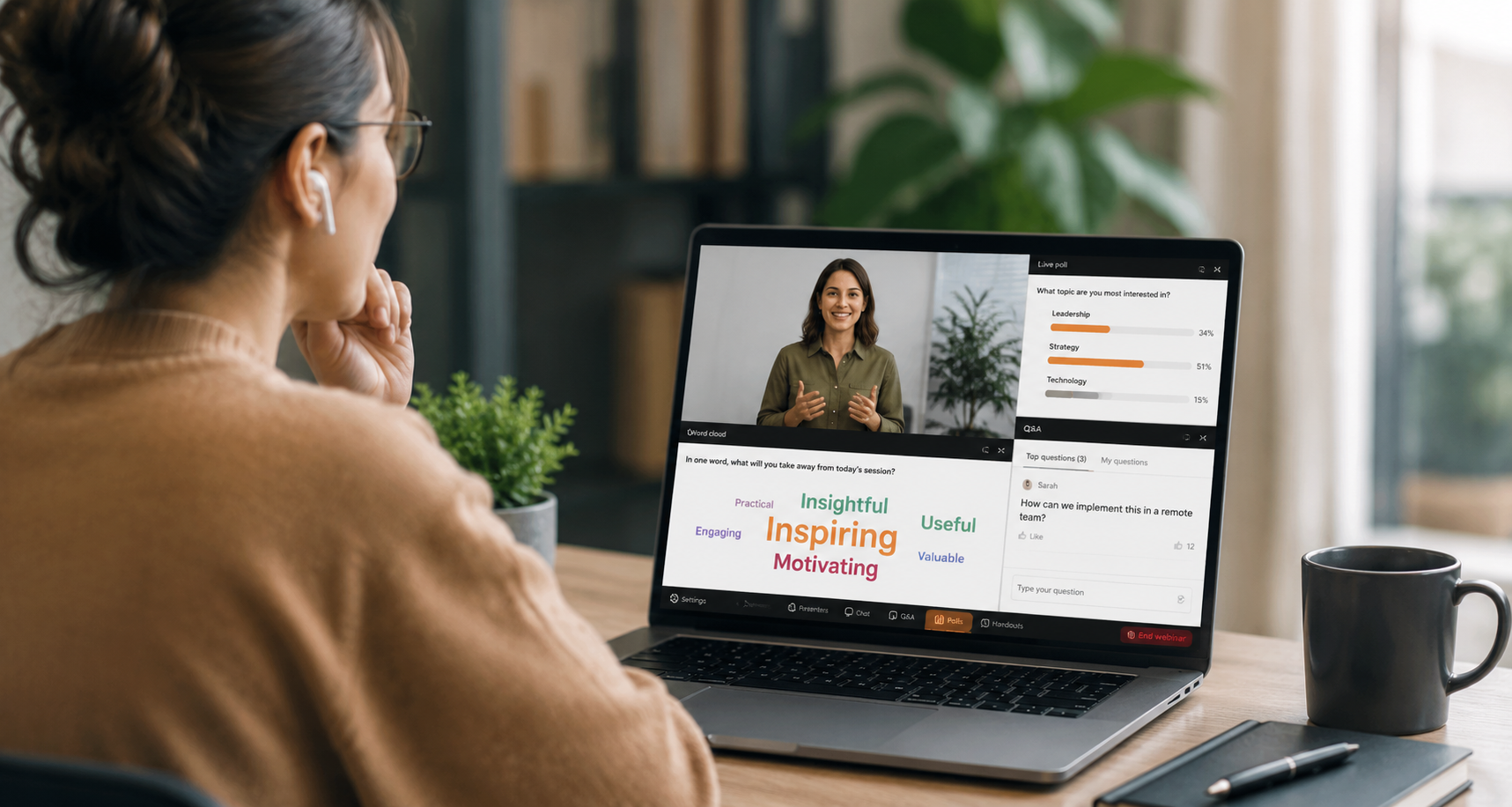
Make it two-way. Build in a way for employees to react, ask questions or vote. Engagement is not something you broadcast at people. It is something you invite them into.
Repeat with rhythm, not volume. A predictable weekly moment where the important updates land teaches people when to pay attention, instead of forcing them to monitor everything constantly.
How do live moments cut through better than another email?
Text scales beautifully but connects poorly. When something genuinely matters, a restructure, a new strategy, a difficult set of results, a live moment does something an email cannot. It creates shared presence. Everyone hears the same message at the same time, sees the reasoning, watches the reaction, and can ask what they are actually thinking.
Live town halls and all-hands broadcasts work because they carry three things at once: information, tone and trust. People do not just learn what is happening. They read how leadership feels about it, and they judge whether the story holds together. You cannot fake that in a slide deck.
The practical challenge is reach. A town hall in a single room excludes remote, hybrid and shift-based staff. Streaming it to every device, then keeping the recording on demand for those in other time zones or on the factory floor, turns a one-off event into something the whole organisation can share on its own schedule.
How do you measure whether internal comms are working?
Open rates tell you almost nothing. Someone can open a message and absorb none of it. To know whether communication is actually working, look at behaviour and sentiment instead.
Useful signals include:
- Participation. How many people joined the live session, submitted a question, or responded to a poll?
- Watch-through. For video and streamed events, how far into the content did people stay? A steep drop-off tells you exactly where you lost them.
- Action taken. Did the thing you asked for actually happen? Enrolments, sign-ups, policy acknowledgements, feedback submitted.
- Sentiment over time. Are the questions people ask becoming more constructive and more engaged, or more cynical?
Measure these and your comms stop being a matter of guesswork. You learn what formats land, which topics your people care about, and where trust is thin.
Protecting the knowledge inside your people
There is one more reason to get internal communication right, and it rarely makes the agenda until it is too late. When engaged, experienced people leave, they take hard-won knowledge with them. Strong internal comms is how organisations capture and share that expertise while it is still in the building. Recorded expert sessions, searchable event libraries and regular knowledge-sharing broadcasts turn individual know-how into a shared asset that outlasts any single career.
The takeaway
Employee engagement is not won by sending more. It is won by sending less, with more care, in formats that respect people's time and invite them in. Lead with the point. Give your messages a human voice. Reserve live moments for the things that truly matter, and make them reachable for everyone, wherever they work. Then measure what people actually did, not what they merely opened.
If you are ready to move beyond the all-staff email and bring your people together around moments that matter, WorkCast helps organisations run polished town halls, live streams and internal broadcasts that reach every employee and keep the value long after the event ends. It might be the quietest way yet to finally be heard.


.png?width=2380&height=2380&name=%E2%80%9CClick%20here%E2%80%9D%20to%20view%20our%20open%20uni%20handbook%20(1).png)