Delivering a virtual open day is very different from presenting at an in person event.
Admissions teams who are confident speaking to a room full of prospective students can sometimes find virtual sessions more challenging. Energy is harder to read, interaction takes more structure, and attention can drop quickly if sessions feel too presentation heavy.
Universities that run successful virtual open days usually prepare their presenters in advance, helping admissions teams adapt their delivery style for an online audience.
With the right preparation, virtual sessions can become highly engaging conversations rather than passive presentations.
Why Virtual Presenting Requires a Different Approach
In a physical open day environment, presenters can easily read the room.
They can see reactions, adjust their pacing, and respond to questions naturally.
Virtual sessions work differently. Prospective students may be watching from different time zones, different devices, and often with other distractions around them.
Because of this, sessions need to be designed to keep attention and encourage participation throughout.
Some of the most effective virtual open days include:
Shorter presentation segments
Clear opportunities for questions
Student voices and panel discussions
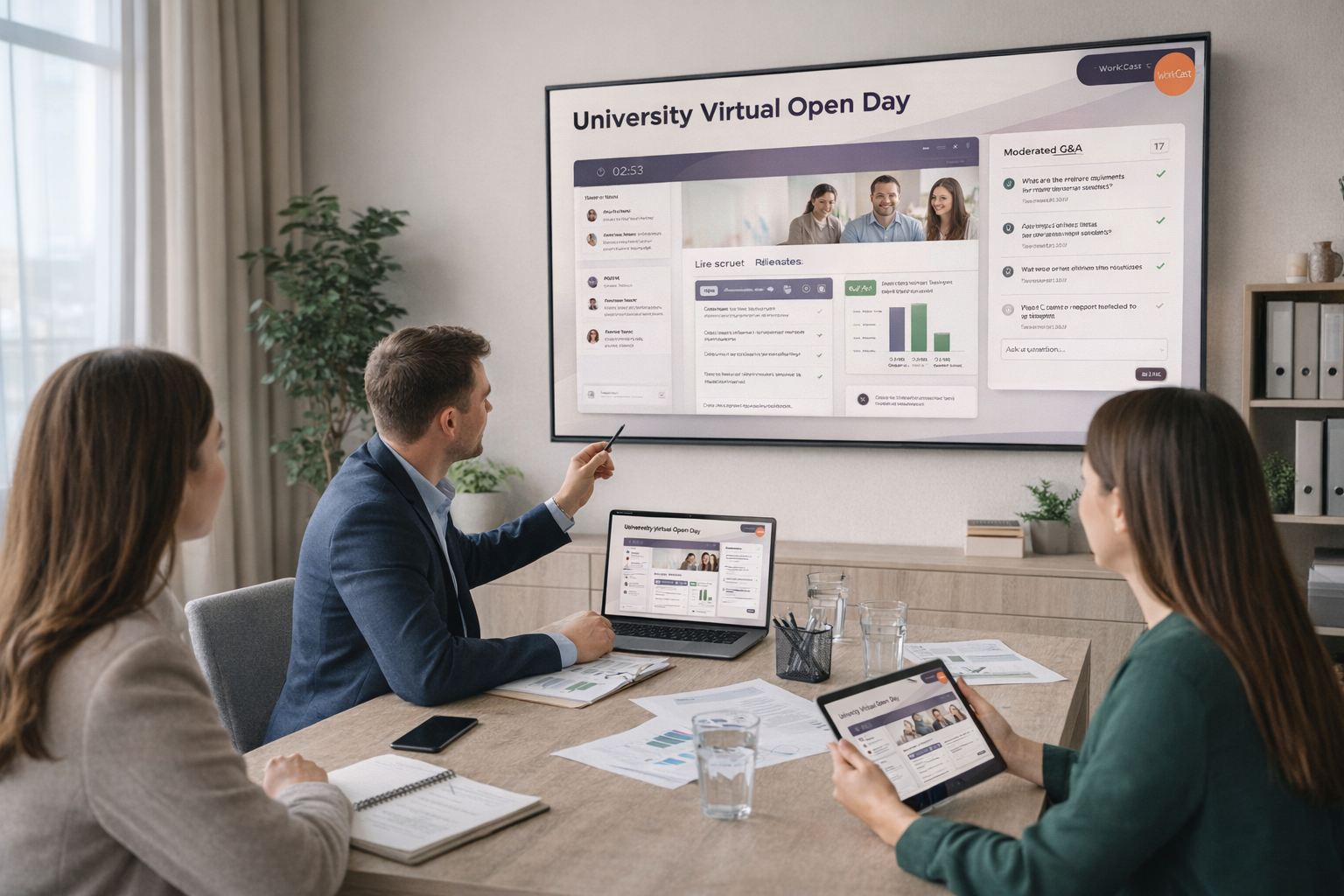
Interactive elements such as polls or live chat
These elements help keep prospective students involved rather than simply watching.
Preparing Admissions Teams Before the Event

One of the most important steps is helping admissions teams feel confident using the virtual event platform.
Even experienced presenters benefit from rehearsals that allow them to become familiar with the technology and event structure.
Preparation often includes:
Running technical rehearsals with presenters
Testing polls, Q&A, and interaction tools
Clarifying presenter and moderator roles
Practicing how questions will be handled during the session
These rehearsals help reduce pressure on the day of the event and ensure sessions run smoothly.
Designing Sessions That Encourage Participation
Virtual open days are most effective when they feel interactive.
Rather than delivering long presentations, many universities structure sessions around conversations.
This might include:
Student panels discussing their experiences
Moderated Q&A sessions with academics
Course specific discussions for prospective students
Short presentations followed by audience questions
These formats allow prospective students to explore topics that matter most to them and create opportunities for meaningful interaction.
Supporting Presenters During the Event
Successful virtual open days rarely rely on presenters alone.
Many universities use moderators or producers to support sessions while they are running.
Moderators can:
Surface relevant questions from the audience
Manage live chat discussions
Keep sessions on time
Support presenters if technical issues arise
This allows admissions teams to focus on delivering the content and engaging with prospective students.
Learning From Engagement After the Event
Virtual open days generate valuable insight into what prospective students care about.
Which sessions attracted the most viewers.
What questions were asked most frequently.
Where students spent the most time during the event.
These insights help universities refine future events and better understand how prospective students explore their options.
Over time, engagement data can help recruitment teams improve event design, strengthen follow up communication, and support students as they move closer to applying.
Helping Admissions Teams Deliver Their Best Virtual Sessions

Virtual open days give universities an opportunity to connect with prospective students around the world.
When admissions teams are properly prepared, sessions become more engaging, conversations become more meaningful, and students leave with a clearer sense of whether the university is right for them.
Training presenters, designing interactive sessions, and supporting teams during the event can make a significant difference to the overall experience.
If you are exploring how virtual events can support global student recruitment and engagement, you can learn more here:

Share this
Virtual Open Days That Build Trust and Drive Student Progression

How to Use Polling and Chat to Drive Interaction During Virtual Open Days