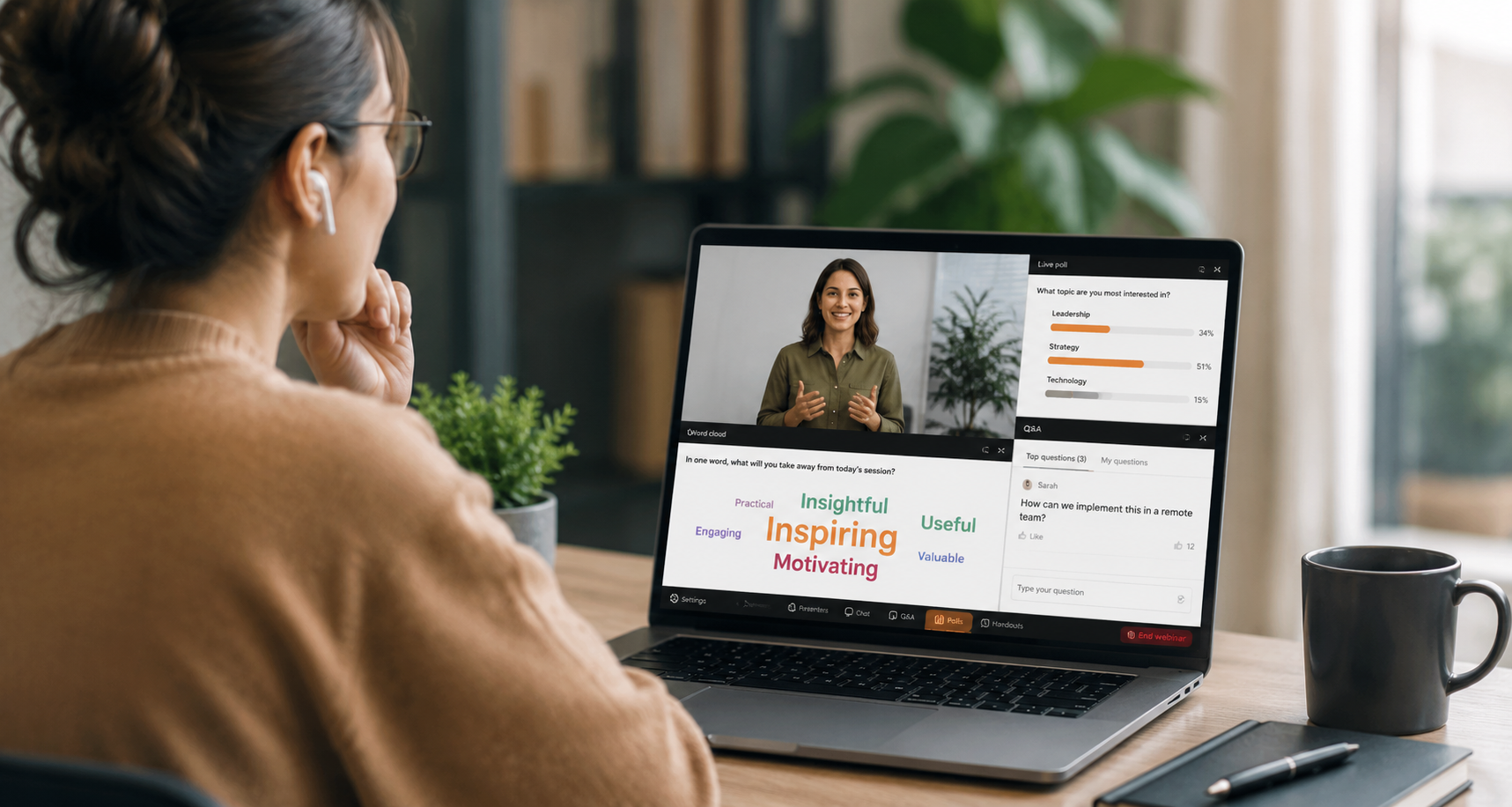
Picture the moment ten minutes into a webinar when the energy quietly drains out of the room. The slides are fine. The speaker knows their subject. And yet you can almost feel hundreds of people switching to a second screen, replying to emails, and mentally checking out while the audio plays on in the background.
That silence is the single biggest threat to any virtual event. Attendance numbers look healthy, but attention has already left the building. The good news is that engagement is not a personality trait some speakers have and others lack. It is a set of decisions you make about structure, timing and interaction, and most of them happen long before anyone joins the live session.
Why do audiences stop paying attention?
People disengage for predictable reasons. The content stops feeling relevant to them personally. The format is one-directional, so there is no reason to lean in. Or the pacing is flat, with no change in rhythm to reset a wandering mind.
Attention online is fragile because the cost of leaving is almost zero. In a physical room, walking out is awkward and visible. On a webinar, disengaging is silent, instant and guilt-free. That changes the job entirely. You are not competing with the other speakers on the agenda. You are competing with every browser tab, notification and to-do list your audience is juggling in real time.
So the question is not "how do we add interactivity?" It is "how do we give people a genuine reason to stay present?"
What actually keeps people watching?
The features that hold attention share one trait: they make the audience feel like participants rather than spectators. A few that consistently earn their place:
- Live polls that change what happens next. A poll is engaging only if the results visibly steer the conversation. Ask a question, show the results, then respond to them. If the outcome makes no difference, people learn to ignore the button.
- Q&A that is genuinely answered. Nothing rebuilds trust faster than a presenter reading out a real question and addressing it by name. Nothing erodes it faster than a queue of ignored questions.
- Moments of deliberate contrast. A change of speaker, a short demo, a customer story, a provocative statistic. The brain re-engages when the pattern breaks. Plan a rhythm change roughly every seven to ten minutes.
- Chat that is hosted, not just enabled. An unmoderated chat goes quiet or goes rogue. A hosted chat, with someone prompting, welcoming and pulling threads into the main session, becomes a room of its own.
The common thread is response. Interactivity only works when the audience sees their input land. A poll no one references, a chat no one reads and a Q&A no one answers are worse than no interaction at all, because they signal that participation is pointless.
How do you design engagement before the event starts?
Most engagement failures are planning failures. If you wait until you are live to think about interaction, you will default to a monologue. Build the interactive moments into your run sheet the same way you build in your slides.
A practical approach is to map the whole attendee journey, not just the live hour. Engagement begins with the invitation that sets an expectation, continues through a joining experience that is quick and frictionless, and extends into the follow-up that keeps the conversation alive. A memorable event feels connected from the first email to the on-demand recording, rather than a single isolated hour that appears and vanishes.
Before you go live, decide three things. What is the one action you want every attendee to take during the session? Where are your two or three planned interaction points? And who owns the chat and Q&A so the presenter can focus on presenting? Answer those and you have already outperformed most webinars.
Where does AI fit into audience engagement?
AI is quickly becoming a practical tool rather than a talking point. Recent industry research on AI adoption points to a clear lesson: the organisations seeing real gains use AI to remove friction and personalise experiences, not to replace the human moments people actually value.
In a virtual event context that means using automation for the repetitive work. Summarising a live chat so the host can spot themes. Generating chapter markers and a transcript for the on-demand version. Surfacing the most-asked questions so nothing important slips through. Suggesting relevant follow-up content based on what an attendee watched. The aim is to free your team to be more human on the things that matter, not to bolt a chatbot onto a session and call it interactive.
How do you measure engagement properly?
Registration and attendance tell you almost nothing about engagement. Watch time, poll participation rates, questions submitted, chat volume and drop-off timing tell you a great deal. Look especially at where people leave. A sharp drop at the same point across several events is a content and pacing signal you can act on.
The best teams treat every event as a rehearsal for the next one. They review the engagement data within a day, note what worked, and adjust the run sheet accordingly. Over time that discipline compounds into events people genuinely look forward to.
The takeaway
Engagement is not decoration. It is the difference between an audience that watches the clock and an audience that leans in, contributes and comes back. Build interaction into the plan, respond to it visibly, and let technology handle the friction so your people can handle the connection.
If you are rethinking how your webinars and virtual events hold attention, it is worth exploring how WorkCast helps you design interactive, connected experiences from invitation through to on-demand. That is where genuine engagement is won.


.png?width=2380&height=2380&name=%E2%80%9CClick%20here%E2%80%9D%20to%20view%20our%20open%20uni%20handbook%20(1).png)