The all-staff briefing ends. Leadership steps away from the broadcast. And for the three hundred employees who could not attend live, that message is already gone.
Shift workers missed it. International colleagues were asleep. Someone was on leave. A new starter joined the week after.
On-demand access is not an afterthought for these employees. It is the only way they ever receive the communication at all. And for organisations running structured internal communications programmes, it is one of the highest-impact changes they can make.
Why On-Demand Changes the Reach of Every Event
A live all-staff briefing has a fixed audience. On-demand turns that same event into a resource that keeps working for days, weeks and months after the broadcast date.
Employees returning from leave catch up on what they missed. New starters access the last six months of leadership communications on their first week. Employees in different time zones watch the briefing at a time that suits their schedule rather than their IT team's calendar invite.
The content is identical. The reach is dramatically different.
What On-Demand Means for Leadership Time
One of the most significant benefits of on-demand internal communications is what it does to leadership capacity.
When a briefing is only available live, every employee who misses it represents a potential repeat session. For organisations with global teams, shift workers or employees across multiple sites, this adds up quickly. Senior leaders end up presenting the same update two or three times to catch everyone.
Simulive and on-demand formats break this cycle. Leadership records once. The content is reviewed and approved before broadcast. It then reaches every employee at whatever time suits them, with no additional demands on executive time.
On-Demand as a Compliance and Governance Tool
For organisations in regulated industries or the public sector, on-demand access is not just convenient. It is a governance requirement.
When important policy updates, compliance communications or regulatory changes are delivered through a structured on-demand platform, there is a clear record of what was communicated, when it was made available and who accessed it. This audit trail is something that a Teams recording shared as an mp4 link simply cannot provide.
Measuring What Happens After the Live Date
One of the most overlooked benefits of on-demand internal events is the data they generate after the broadcast.
Who watched the recording in the week after the live event? Which sections did employees replay? Where did viewers drop off? How many employees in the Manchester office accessed the content compared to the Leeds office?
This post-event data is often more valuable than live attendance figures because it shows genuine engagement rather than passive presence. Employees who seek out and watch an on-demand recording are more engaged with the content than those who joined live and left early.
Building a Webinar Library That Works
On-demand content is most effective when it is housed in a structured, searchable library rather than scattered across email chains and shared drives.
A branded webinar library gives employees a single place to find every leadership communication, past and present. New starters have an onboarding resource. Employees can revisit a briefing before a related project kicks off. Leadership has a visible, professional archive of everything that has been communicated to the organisation.
Over time this library becomes one of the most valuable assets in the internal communications programme, compounding the return on every event that has ever been produced.
How WorkCast Supports On-Demand Internal Communications
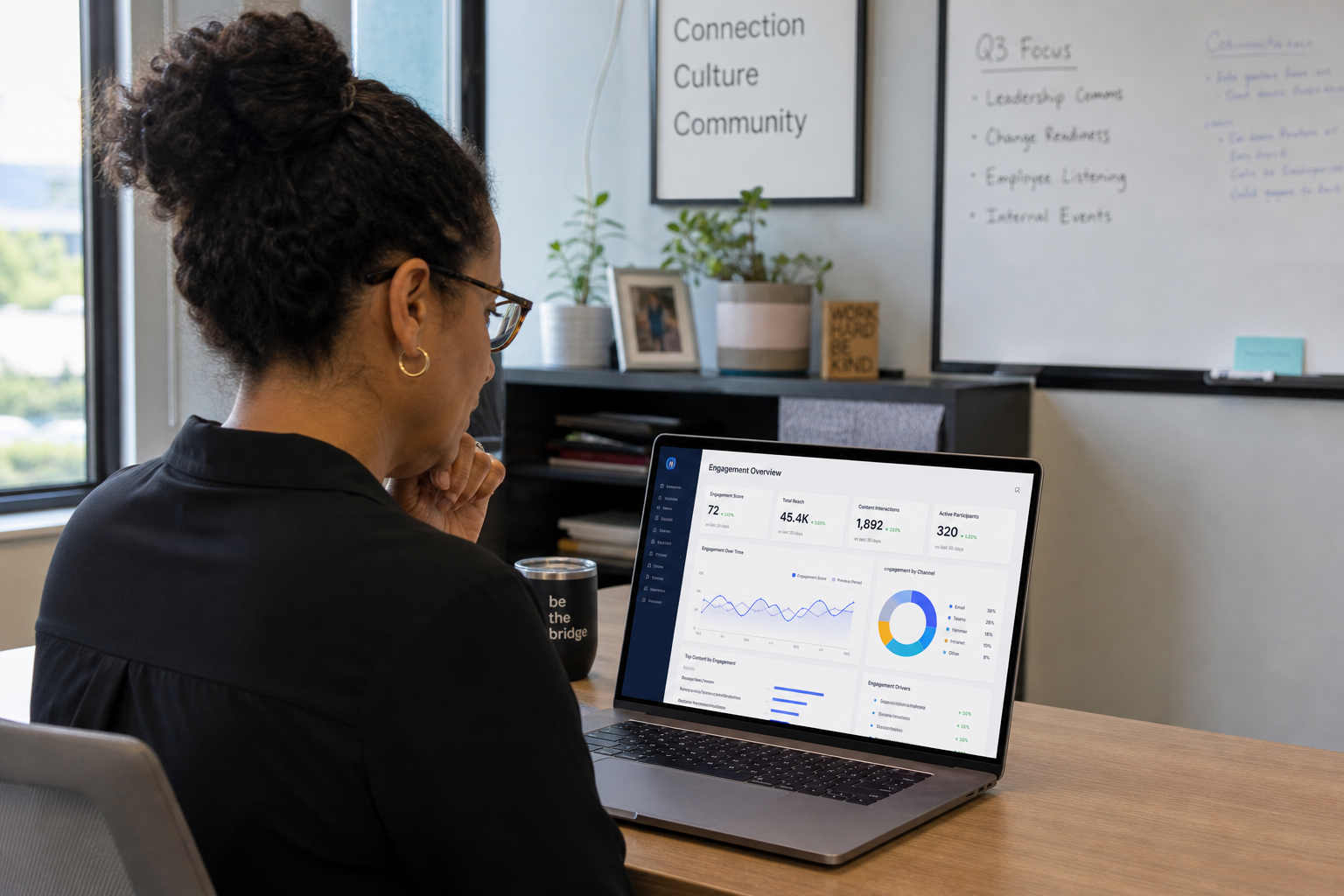
WorkCast supports on-demand access across all five internal event formats. Live and simulive broadcasts are automatically available for on-demand viewing after the event. A branded webinar library houses all content in one place with consistent branding and full reporting. And on-demand engagement data sits alongside live attendance figures in the same reporting dashboard.
Organisations including Ofsted use WorkCast to ensure every employee, regardless of shift pattern, location or time zone, has access to the same leadership communications.
See how WorkCast structures an internal communications programme for your organisation: https://info.workcast.com/solutions-internal-communications


.png?width=2380&height=2380&name=%E2%80%9CClick%20here%E2%80%9D%20to%20view%20our%20open%20uni%20handbook%20(1).png)
.png?width=3000&height=624&name=5%20(5).png)