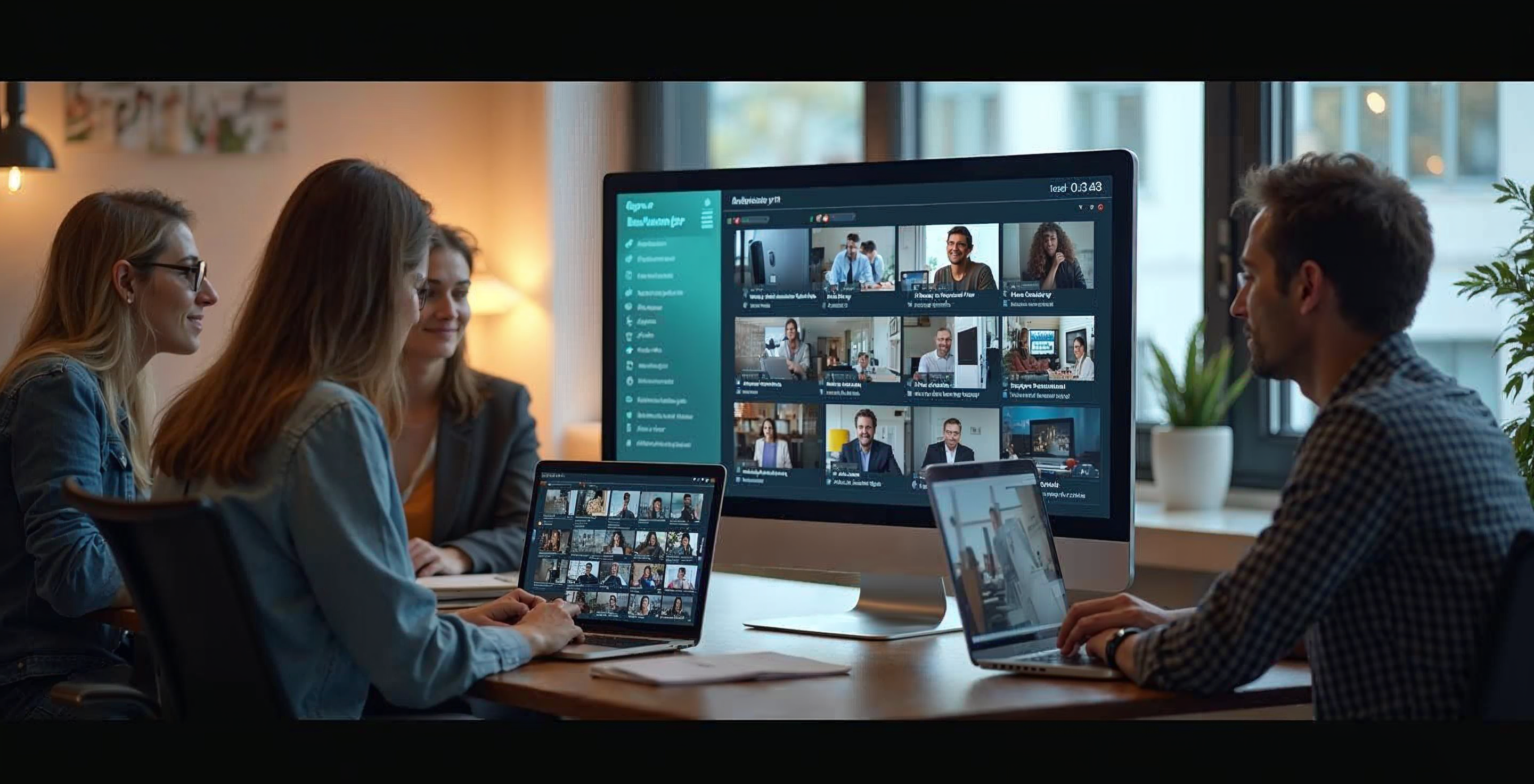
Universities often see strong registrations for virtual open days from international students.
But attendance and engagement can vary widely across regions.
Different time zones, language barriers, and competing commitments can all affect whether prospective students actually attend and participate.
Promoting virtual open days to international audiences therefore requires more than a standard event invitation. It involves designing communications, scheduling, and engagement strategies that work for students joining from different parts of the world.
When done well, virtual open days become one of the most effective ways to connect with global audiences and support international recruitment.
Understanding the Challenges of Global Recruitment
International students often rely on virtual open days as their first real interaction with a university.
For many, travelling to campus events is not possible before applying. That means the virtual experience plays a critical role in helping them understand the university, the courses available, and what studying there might feel like.
However, universities frequently face several challenges when promoting events internationally:
• Time zones that make live attendance difficult
• Language differences that affect understanding
• Different priorities between undergraduate and postgraduate applicants
• Large volumes of student questions during sessions
Addressing these challenges early in the promotion and planning process can significantly improve attendance and engagement.
Tailoring Messaging for International Students
International students often have different questions and priorities compared with domestic applicants.
Some are focused on visa processes and accommodation. Others want to understand career outcomes, employability support, or how international students are supported on campus.
When promoting virtual open days, universities benefit from highlighting the topics that matter most to these audiences.
This might include sessions covering:
• Student visa guidance
• International student support services
• Accommodation options
• Career opportunities after graduation
Promotional messaging that clearly outlines these topics helps international students see the relevance of attending the event.
Making Time Zones Work for Your Audience
One of the most common barriers to international attendance is scheduling.
A time that works well for UK audiences may fall in the middle of the night for students in Asia or the Americas.
Universities increasingly address this challenge by designing virtual open days with global accessibility in mind.
Common approaches include:
• Hosting multiple live sessions at different times
• Providing simulive presentations with live Q&A
• Offering on demand access to key sessions
These options allow students to engage with the event at a time that suits them while still benefiting from the content and discussions.
Using Technology to Support Global Engagement
Technology plays a key role in making virtual open days more accessible for international audiences.
Simple improvements can significantly reduce friction during registration and attendance.
Examples include:
• Registration pages that display event times in the attendee's local time zone
• Automated reminders that adjust to regional time differences
• Multilingual registration options
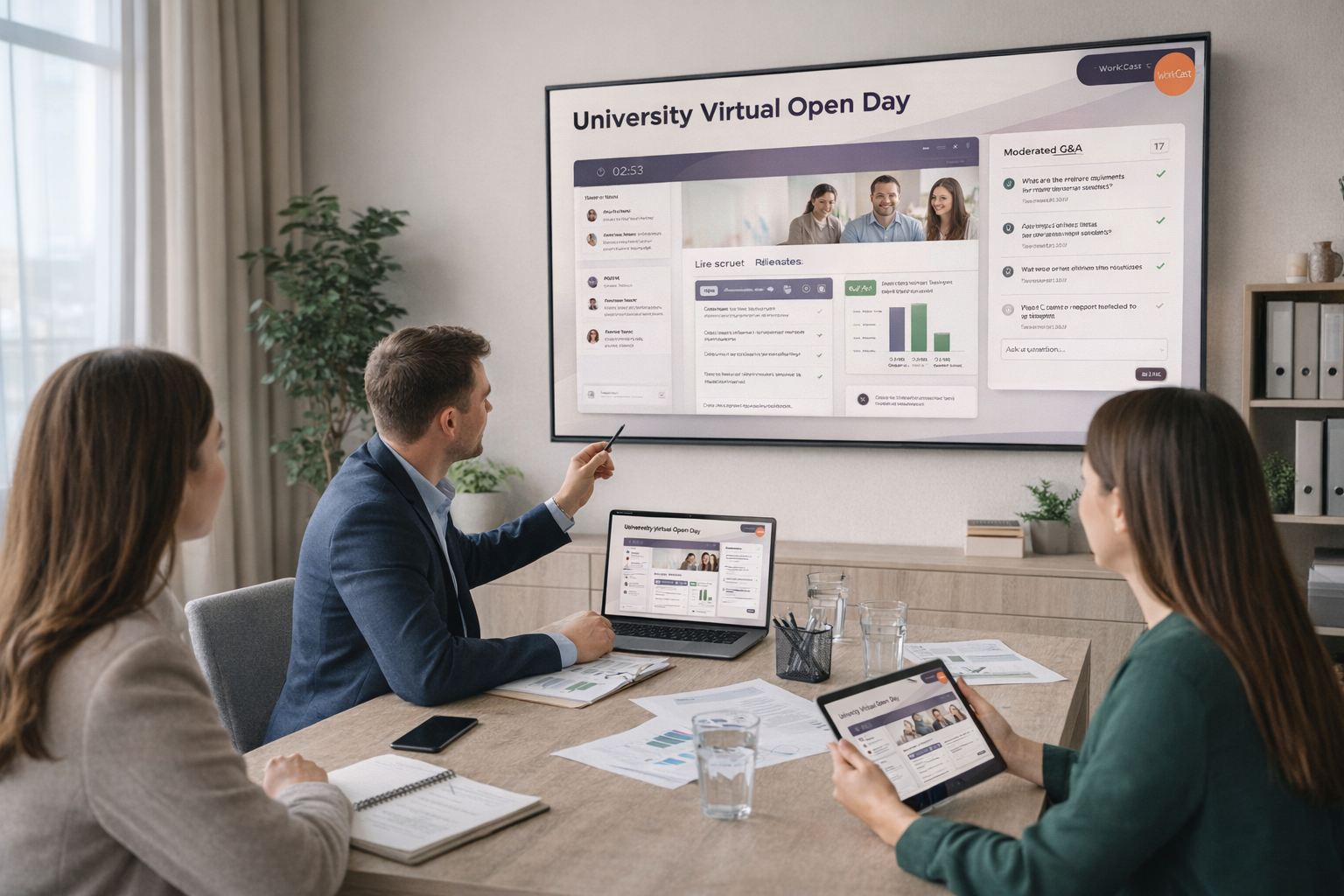
• Moderated live Q&A to manage large volumes of questions
These features help ensure students can easily understand when the event takes place and feel confident participating.
Creating Interactive Experiences for International Students
Virtual open days that encourage participation tend to see stronger engagement from international audiences.
Interactive features help transform events from one way presentations into conversations.
During sessions, universities often include:
• Live polls to understand student priorities
• Moderated Q&A to answer questions in real time
• Student panels that share authentic experiences
These elements give prospective students the opportunity to explore topics that matter most to them and feel more connected to the university.
Turning Engagement Into Recruitment Insight
One of the biggest advantages of virtual open days is the insight they provide into student interests.
Every question asked, poll response submitted, or session attended provides valuable signals about what prospective students are looking for.
When event platforms integrate with CRM systems, this data can support more personalised follow up.
Admissions and recruitment teams can use these insights to:
• Understand which courses attract the most international interest
• Identify students who are highly engaged during sessions
• Tailor follow up communications to individual interests
This allows universities to move beyond simple attendance numbers and build a clearer picture of prospective student intent.
Supporting Global Recruitment Through Virtual Open Days
Virtual open days have become an important part of international recruitment strategies.
When promoted effectively, they allow universities to reach prospective students around the world while providing meaningful engagement opportunities.
By combining thoughtful promotion, flexible scheduling, interactive sessions, and data driven follow up, universities can create virtual open days that truly support global student recruitment.
If you are exploring how virtual events can support international recruitment, you can learn more about running successful university virtual open days here:
https://info.workcast.com/university-college-virtual-open-houses