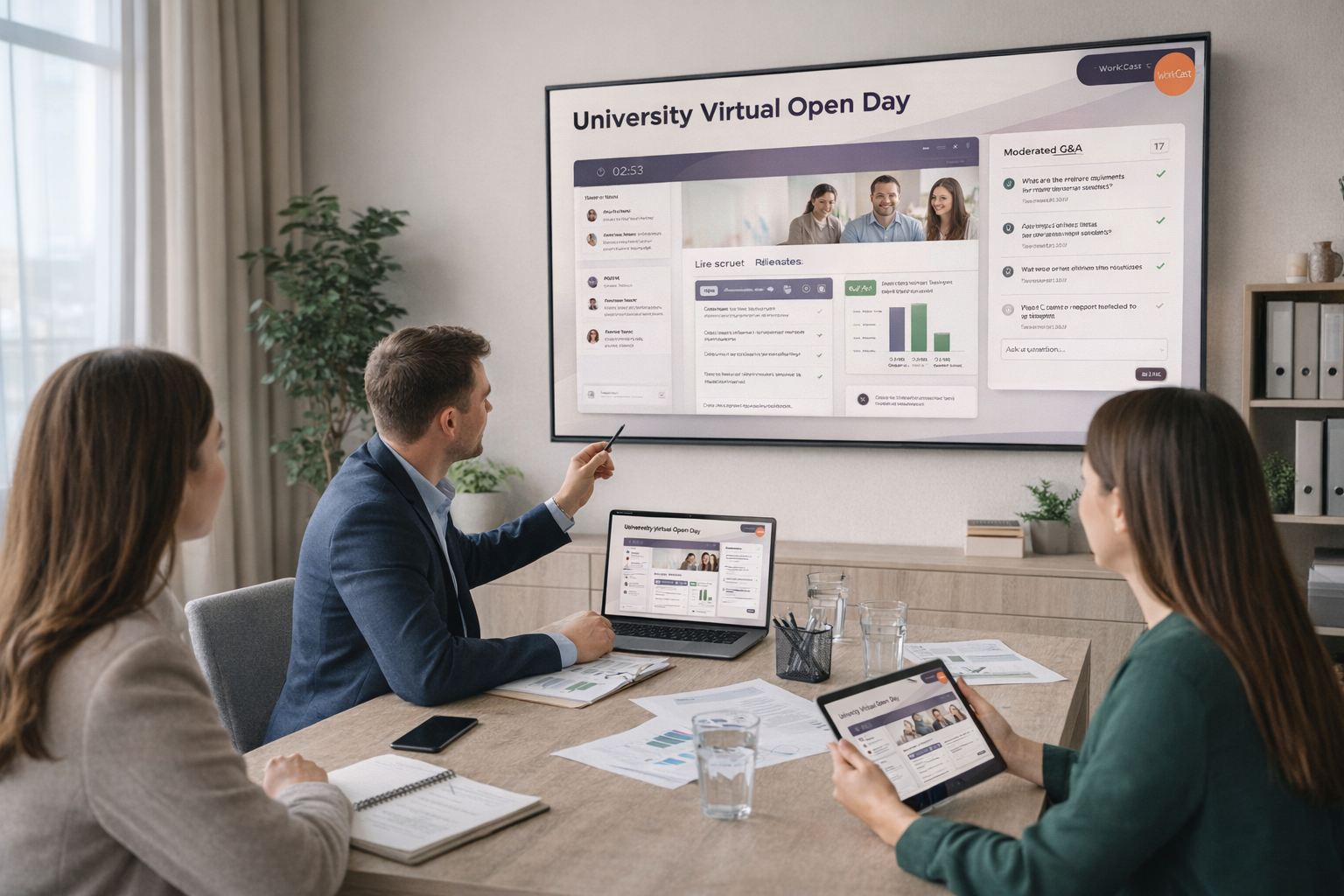
You’ve spent weeks planning your virtual open day, but turnout or engagement didn’t quite land how you hoped. Without clear data insights, it’s difficult to know what worked, what didn’t, and what to improve next time.
That’s where analytics come in. With the right data, virtual open days can move beyond simply attracting registrations and become engaging, interactive experiences that genuinely connect with prospective students. This post explores how data-led event optimisation can help you get more value from every virtual open day you run.
Harnessing Data Insights

Understanding how your audience behaves during your event is the key to improving performance. Analytics give you visibility into what captures attention, where engagement peaks, and where it drops off.
Analysing Attendee Behaviour
Knowing how attendees interact with your virtual open day helps you make informed decisions. From which sessions they attend to how long they stay engaged, every interaction tells a story.
You might notice increased engagement during a particular subject talk or Q&A session. That insight can shape your future agendas, helping you prioritise content that resonates most with your audience.
Data is not just numbers on a dashboard. It highlights patterns in behaviour and reveals what prospective students care about. If certain topics consistently hold attention, expanding or repeating them can significantly improve engagement in future events.
Every audience is different. Using data to understand yours allows you to design events that feel more relevant, valuable, and tailored.
Tracking Engagement Metrics
Engagement metrics act as a roadmap for continuous improvement. Features like live polls, Q&A, and session attendance data help you understand how involved your audience really is.
Research shows that 47 percent of attendees are more likely to ask questions during a virtual event. Making it easy to submit questions encourages participation and creates a more inclusive experience.
Tracking engagement also helps identify drop off points. If attendees regularly disengage at a specific moment, it may be time to rethink the format, pacing, or content delivery. Regularly reviewing these metrics helps ensure your virtual open days remain engaging from start to finish.
Enhancing Audience Engagement

Once you understand your data, you can use it to create more interactive and personalised experiences that keep attendees engaged throughout your event.
Personalising the Experience
Personalisation plays a huge role in audience engagement. Using registration data and behaviour insights, you can tailor content and sessions to different audience interests.
This might mean recommending relevant sessions, creating targeted agendas, or grouping content by subject area. When attendees feel the event is designed with them in mind, they are far more likely to stay engaged.
Personalisation does not stop when the event ends. Sending tailored follow-up content based on session attendance or interests helps maintain momentum and builds stronger relationships with prospective students.
Interactive Tools That Drive Engagement
Interactive tools are essential for successful virtual open days. Polls, live chat, Q&A, and breakout rooms turn passive viewing into active participation.
Polls encourage instant interaction and provide valuable insight into audience preferences. Live chat creates a sense of community, allowing attendees to connect with both presenters and each other.
These tools help replicate the conversation and energy of in person open days, keeping attendees engaged and involved throughout the experience.
Leveraging WorkCast Analytics

WorkCast’s analytics capabilities are designed to give you actionable insights before, during, and after your virtual open days.
Real Time Reporting
Real time reporting allows you to monitor engagement as it happens. If you spot a dip in attention during a session, you can react immediately by adjusting content or introducing an interactive element.
These insights also highlight which sessions perform best, helping you shape future event agendas around proven topics and formats.
By continuously monitoring engagement in real time, you can deliver more responsive, dynamic events that keep audiences engaged from start to finish.
Seamless CRM Integration
Integrating event data with your CRM allows you to build a complete picture of the attendee journey. From registration through to post event engagement, every interaction can be captured and used to inform follow-up activity.
This makes it easier to segment audiences, personalise communications, and nurture prospective students with relevant content. CRM integration ensures no valuable insight is lost and supports more targeted, effective recruitment strategies.
Turning Insight Into Impact
With the right data, virtual open days become more than a one-off event. They become a powerful engagement tool that evolves and improves over time.
By combining audience insights with WorkCast’s analytics and engagement tools, you can create virtual open days that attract the right audiences, keep them engaged, and support meaningful next steps.
Explore what’s possible with your Virtual Open Days here:
https://info.workcast.com/solutions/virtual-events
Share this

Virtual Open Days That Welcome Everyone

Stop the Glitches: How to Deliver Seamless Virtual Open Days