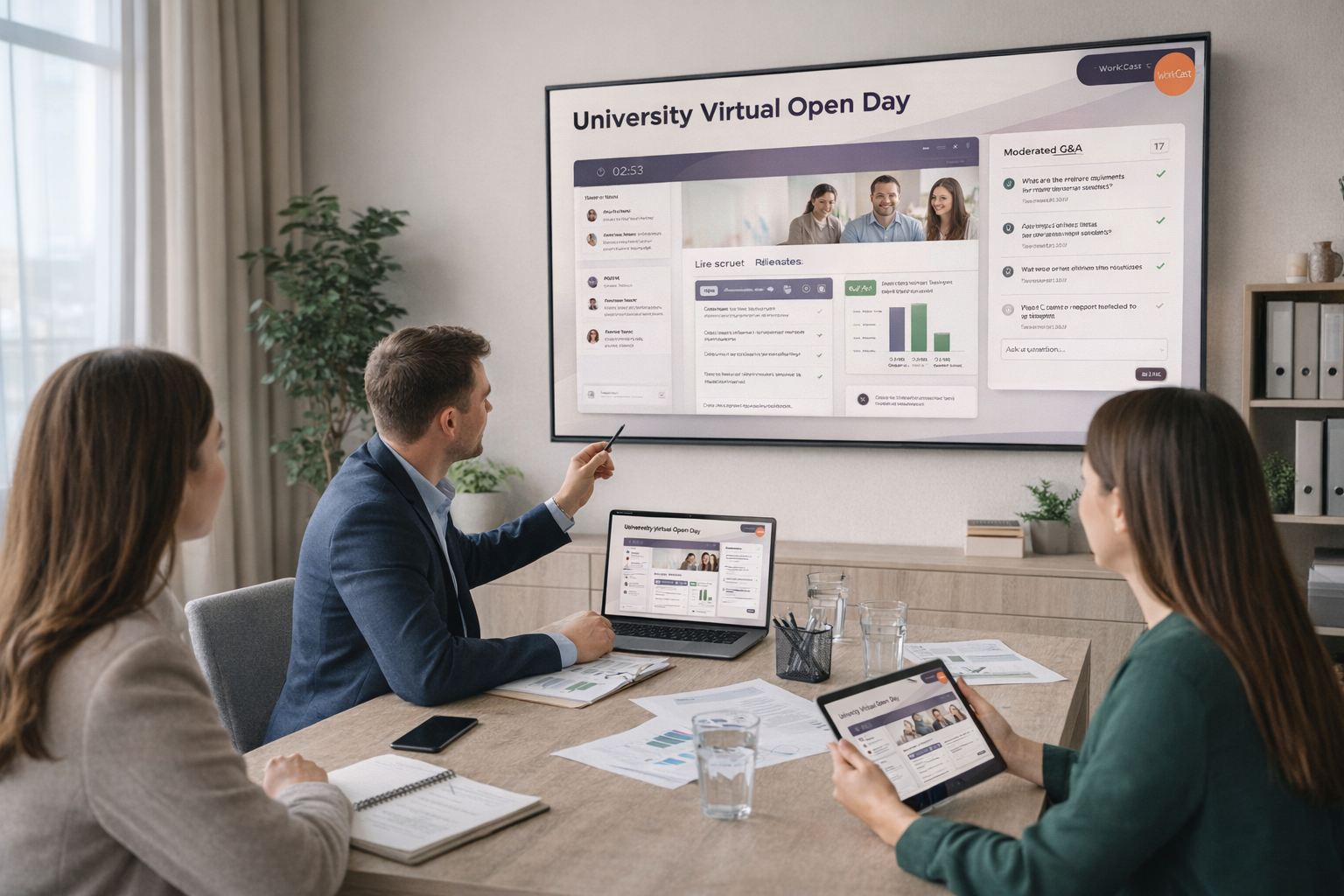
Virtual open days are no longer just about sharing information. To be effective, they need to create connection, encourage participation, and guide prospective students towards meaningful next steps.
This guide outlines how universities can plan, deliver, and follow up on virtual open days that engage audiences and drive real outcomes, supported by platforms like WorkCast.
Start With Clear Objectives 🎯
Every successful virtual open day begins with a clear purpose. Before planning sessions or content, define what success looks like for your institution.
Are you aiming to increase applications, improve engagement, support international recruitment, or encourage follow-up actions such as campus visits or advisor conversations?
Clear objectives help shape your agenda, guide your messaging, and keep teams aligned throughout the event lifecycle. They also make it easier to measure performance and continuously improve future events.
Design an Agenda That Keeps Audiences Engaged 🚀

A compelling agenda balances structure with flexibility. Prospective students want the freedom to explore what matters most to them, whether that’s academic content, campus life, or admissions guidance.
Consider combining keynote sessions with subject talks, student panels, campus tours, and live Q&A opportunities. Keeping sessions concise and varied helps maintain attention, especially in a virtual setting.
Offering choice allows attendees to create a personalised experience that feels relevant and valuable, rather than overwhelming.
Use Interactivity to Build Connection 💬
Engagement is critical to conversion. Interactive features help turn passive viewers into active participants.
Live Q&A, chat, polls, and audience prompts encourage students to ask questions and share interests in real time. These moments of interaction help build trust and make virtual events feel more human.
WorkCast supports this level of engagement at scale, enabling universities to deliver interactive sessions that remain smooth, structured, and accessible for all attendees.
Create a Seamless Online Experience 💻
A strong virtual open day experience should feel intuitive and welcoming from the moment attendees arrive.
Clear navigation, consistent branding, and a user-friendly interface all contribute to attendee confidence. When students can easily find sessions, ask questions, and explore content, they are more likely to stay engaged.
Incorporating multimedia such as video tours, recorded sessions, and on-demand content also allows students to explore at their own pace while extending the life of your event beyond the live day itself.
Use Data to Refine and Improve 📊
Analytics play a vital role in understanding what resonates with your audience.
Tracking attendance, session popularity, engagement levels, and interaction data provides valuable insight into student behaviour and interests. These insights help recruitment and marketing teams refine content, personalise follow-up communication, and improve future event strategies.
Data-driven decision making ensures each virtual open day delivers more value than the last.
Follow Up to Drive Conversion ⭐
The impact of a virtual open day does not end when the event closes. Thoughtful follow-up helps turn interest into action.
Personalised emails, access to on-demand sessions, and invitations to future events or one-to-one conversations keep prospective students engaged and supported throughout their decision-making journey.
Clear next steps help students move forward with confidence rather than feeling unsure about what to do next.
Bringing It All Together 🌍

A successful virtual open day combines clear planning, engaging delivery, and strategic follow-up.
By using the right tools and focusing on authentic interaction, universities can create experiences that not only inform but also convert, guiding prospective students towards meaningful next steps.
👉 Explore your virtual open day possibilities with WorkCast
https://info.workcast.com/solutions/virtual-events/virtual-open-days
Share this
Stop the Glitches: How to Deliver Seamless Virtual Open Days

Simplifying the Decision-Making Journey for Prospective Students: A WorkCast Perspective